Book Training Contact Us

Certified LeSS Training

Large-Scale Scrum (LeSS) is a framework for scaling agile development to multiple teams. LeSS is a framework designed for scaling while maintaining Scrum principles such as empiricism, cross-functional teams, and self-managing teams. It provides simple rules and guidelines that can be applied to large-scale product development.

Our LeSS Trainers

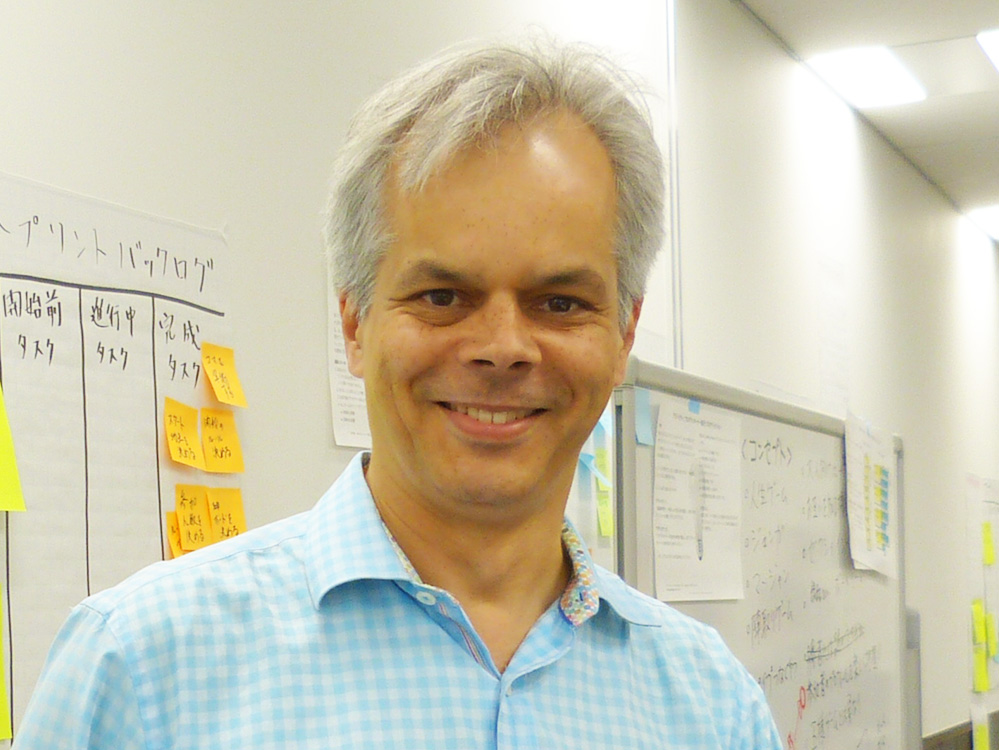
Our training sessions are led by expert Agile coaches who have supported the implementation and promotion of Agile, Scrum, and LeSS across various organizations. This includes LeSS co-creators Craig Larman and Bas Vodde, as well as Kazumasa Ebata, the first Japanese Certified Scrum Trainer.

About LeSS Training

Certified LeSS Practitioner Certified LeSS Practitioner Training

This training is a Scrum Alliance® validated Supplemental Learning course. Large-Scale Scrum (LeSS) is a framework for scaling agile development to multiple teams. LeSS is a framework that can be applied when scaling is necessary while maintaining Scrum principles such as empiricism, cross-functional teams, and self-managing teams. It also provides simple rules and guidelines for large-scale product development. The Certified LeSS Practitioner training covers all LeSS principles, the overall framework, rules, and guides. It also provides essential information for adopting or improving LeSS in practice. The course content covers areas of high interest, including an overview of LeSS, case studies, workshops, and Q&As. All participants will receive the Certified LeSS Practitioner certification and an account on less.works . At less.works , you can access various information about LeSS, course details, and connect with other participants.

Target Audience
  • Those who are considering or involved in a LeSS adoption
  • Those with a basic knowledge of Scrum (CSM/PSM certification holders, or those who have thoroughly read introductory Scrum materials)
Course Duration
  • 3 Days
Curriculum
  • Day 1
    • Introduction
    • Scrum and LeSS Overview
    • LeSS Principles
    • Customer Value and Feature Teams
  • Day 2
    • What is the Product?
    • Definition of Done and its Importance
    • Feature Team Adoption Map
    • Product Owner and Product Backlog
    • The Role of Management
    • Organizational Impact and Typical LeSS Structures
  • Day 3
    • PBR, Sprint Planning, Review, and Retrospective in LeSS
    • Scaling Considerations and Techniques
    • Integration and Coordination
    • LeSS Adoption in Organizations
    • Case Study: Two Large-Scale LeSS Adoptions at Nokia Networks
    • The Role of the Scrum Master in LeSS

Certified ScrumMaster® + Certified LeSS Basics Certified ScrumMaster® + Certified LeSS Basics Training

In this training, you can obtain both Certified ScrumMaster® and Certified LeSS Basics certifications simultaneously. The Certified LeSS Basics training is designed for those who want to understand what LeSS (Large-Scale Scrum) is and determine if it fits their organization. Participants are encouraged to study with free pre-course online materials, allowing the actual training to focus on advanced topics. The majority of the training consists of workshops, with very few lectures and minimal use of PowerPoint.

Target Audience
  • Individuals with a natural curiosity and passion for learning
  • Those who strive to achieve excellence in their professional work
  • Those who enjoy problem-solving and exploring diverse options in complex environments
  • Those who value both solid theory and learning through practical experience
  • Consultants who want to gain confidence in the services they provide
  • Business leaders who want to avoid typical pitfalls when adopting Scrum
Course Duration
  • 5 Days
Curriculum
  • Differences between Agile development and traditional project management
  • Exploring the responsibilities of the three Scrum roles
  • How to write good Product Backlog Items (User Stories, etc.)
  • Techniques for decomposing large requirements (Epics) into detailed items
  • Prioritizing the Product Backlog
  • Estimating effort
  • Maintaining the Sprint Backlog
  • Dos and Don'ts of Scrum Events (Sprint Planning, Daily Scrum, Sprint Review, and Retrospective)
  • Sprint execution with self-organizing teams
  • Definition of Done and potentially shippable Product Increments
  • Environments that foster self-organization
  • Small group dynamics (psychological aspects of innovative teams)
  • Modern development practices including Test-Driven Development (TDD)
  • Lean principles originating from the Toyota Production System (TPS)
  • Product Owner planning and forecasting across Sprints
  • Case studies of Scrum adoption and large-scale development in big organizations
  • Common organizational impediments and case studies
  • Success and failure patterns in Scrum and Agile adoption

CSD® + A-CSD℠ + Certified LeSS Basics LeSS in Action: Scrum Developer Training

In this 5-day hands-on development training, teams will run Sprints to concurrently develop and deliver user-accepted features on a live product. Participants will spend over 50% of their time working directly on the project. You will also learn technical practices such as Specification by Example, TDD, Continuous Integration (CI), and Continuous Delivery (CD), along with organizational skills including collaborative approaches for Scrum teams, code sharing, and the Definition of Done. Graduates are eligible to earn CSD®, A-CSDª, and Certified LeSS Basics certifications.

Target Audience
  • Individuals with development experience in Java
Curriculum
  • Day 1
    • Requirements Workshop / A-TDD
    • Definition of Done
    • Cucumber and Friends
    • Sprint Planning
  • Day 2
    • Test-Driven Development (TDD)
    • Collaboration (Working in teams, SCM, Build automation & other tools, Pair programming, CI & CI systems, Collective code ownership)
  • Day 3
    • Code Smells and Refactoring
    • Testing and Test Automation (Test Pyramid, Mocking, Unit testing in other languages: JavaScript, Python, etc., Good Unit Testing)
    • Thinking about Design
    • Revisiting Feature Teams
    • Working with Legacy Code
    • Craftsmanship
    • Retrospective

Get Your Certification

Please apply for our various training programs
using the link below.