
The LeSS Conference was held in Munich, Germany, on September 12–13, 2019.
Munich is famous for Oktoberfest, the world's largest beer festival. Just before the festival's official start, the LeSS Conference took place at a unique venue: a former brewery that had been converted into an event space.
The conference featured a wide range of international speakers, including many members of Odd-e Global. Akihito Enomoto, an Agile Coach from Odd-e Japan, also attended the event.
The event kicked off with keynotes from LeSS co-creators Bas Vodde (Odd-e Singapore) and Craig Larman. The program featured three main session tracks: Experiments (experience reports from those adopting LeSS), Practices (techniques to improve LeSS adoption), and Open Space.
Over the course of the two-day conference, many insightful sessions were held. Here, we would like to share some highlights from the program.
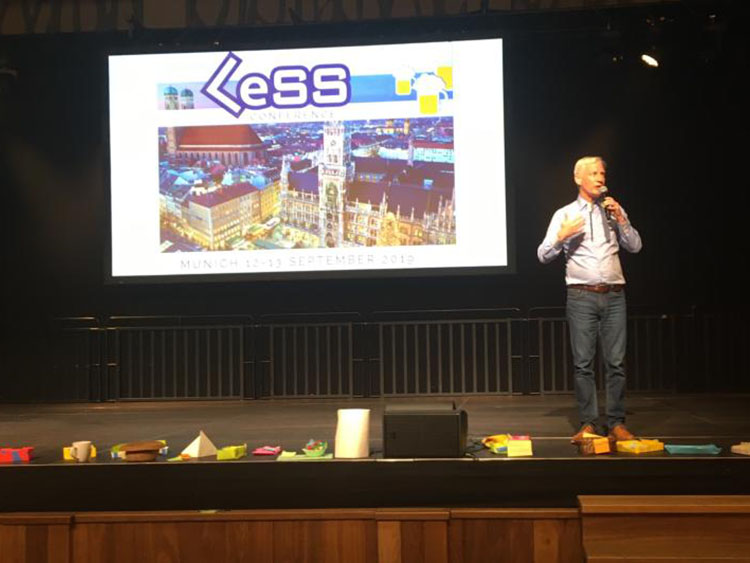
The opening talk was delivered by Bas Vodde, a member of Odd-e Singapore and co-creator of LeSS along with Craig Larman.
Since LeSS conferences emphasize team learning, a team-building workshop was held for all participants immediately following the opening talk.
Participants proceeded through the two-day conference while sharing their learnings within these newly formed teams.
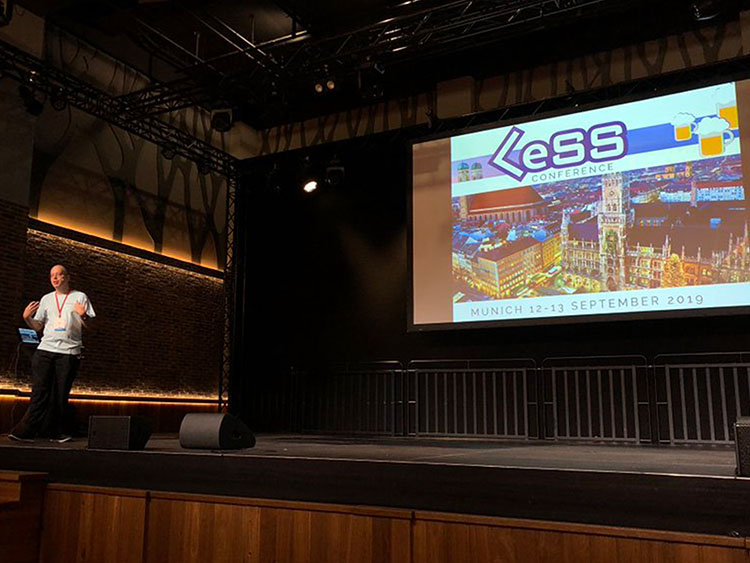
Politics often carries a negative connotation, yet it is unavoidable for Scrum Masters seeking to drive organizational change.
However, there are both constructive and unconstructive approaches to politics.
This talk explored how Scrum Masters can utilize constructive political techniques to guide an organization in a better direction.
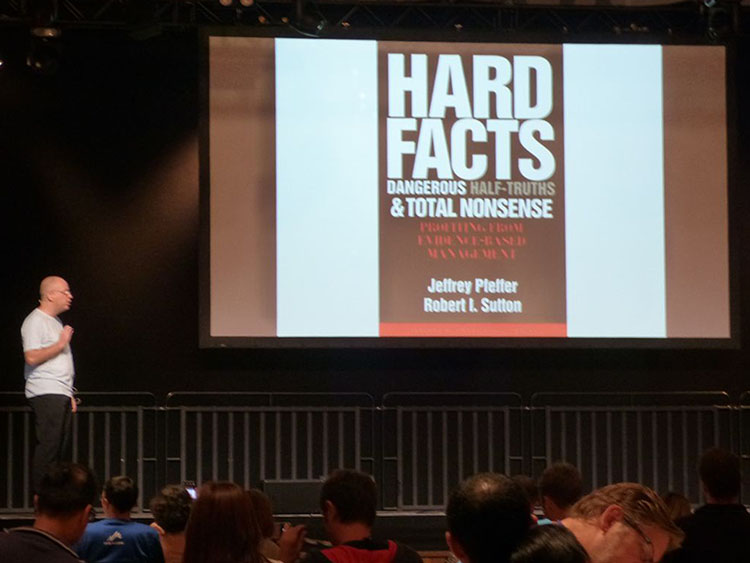
Michael James (MJ) delivered a message that organizations should make decisions about adopting LeSS only after fully understanding both its advantages and disadvantages, as well as the inherent difficulties of the transition.
MJ's Certified ScrumMaster® (CSM®) training is available in Japan.
His CSM® course is unique as it includes an introduction to the fundamentals of LeSS.
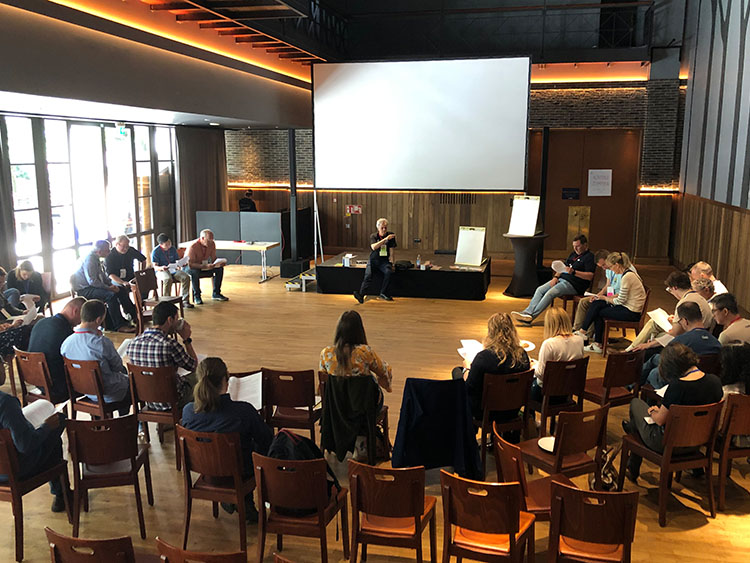
Ivan Zimine, a member of Odd-e Singapore, often visits Japan to facilitate Certified Scrum Developer (CSD®) training.
In this talk, he shared his journey as a software developer—how he learned and how he passed that knowledge on to others.
It was a truly valuable session that emphasized the importance of learning in groups or pairs rather than in isolation.
One of the keynotes at the conference was delivered by Craig Larman, who co-created LeSS alongside Bas Vodde.
In large-scale development, developers must share various resources. Craig posed a compelling question: could Nobel laureate Elinor Ostrom's principles for the 'governance of the commons' (the management of shared resources) be applied to software development?
This session by Yi Lv, a member of Odd-e China and a LeSS Trainer, explores various types of product backlogs and investigates what truly defines a 'better' product backlog.
An Open Space session hosted by Chokchai Phatharamalai, a member of Odd-e Thailand.
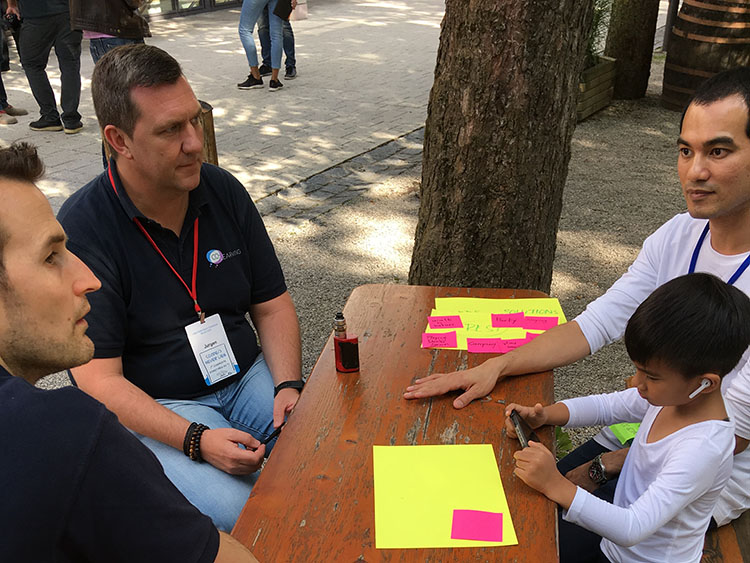
A little LOVE can change the world.
This session focused on manager-free product development at GROOVE X, the company behind LOVOT—a family-type robot designed to nurture 'LOVE'.
The case study was presented by Michael James (MJ), widely known for his Certified ScrumMaster® (CSM®) training, and Akihito Enomoto from Odd-e Japan, who serves as a co-instructor and interpreter for MJ's CSM® courses.
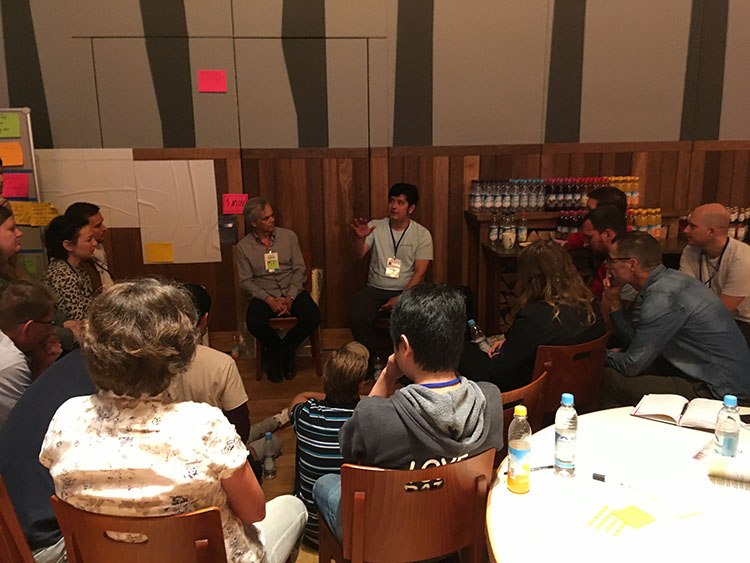
An Open Space session hosted by Yeong Sheng Tan, a member of Odd-e Singapore.
A workshop on collaborating with vendors within a LeSS framework, hosted by Viktor Grgić from Odd-e Hong Kong.
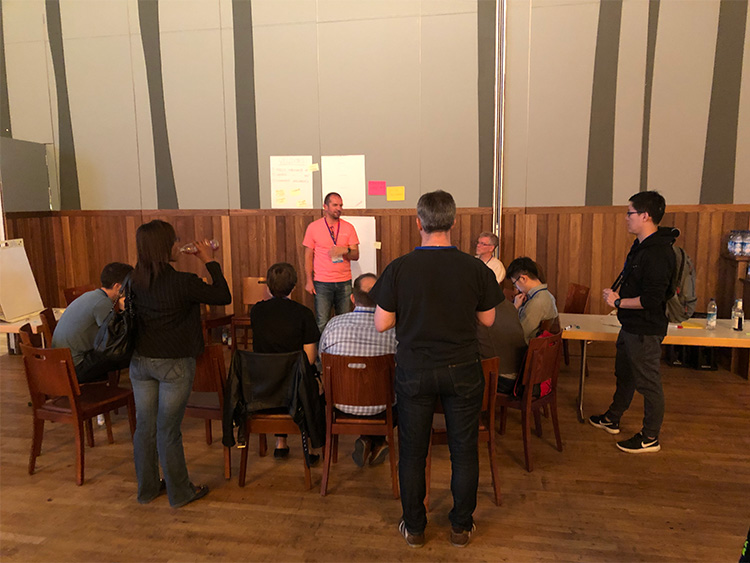
An Open Space session hosted by Yeong Sheng Tan, a member of Odd-e Singapore.
Limbo is live shared programming where the focus of two principles is constantly balanced ("Limbo on the Cheap" via "test && commit || revert").
Limbo scales development for thousands of developers working simultaneously on the same codebase by establishing these two principles:
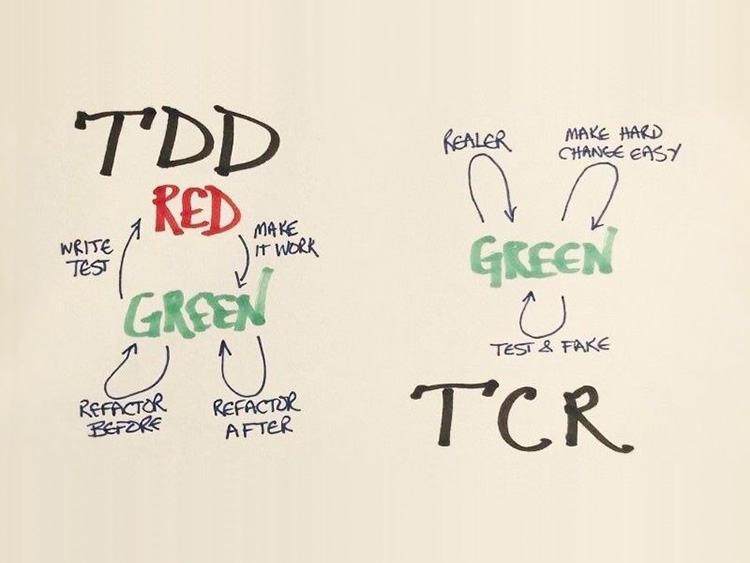
Scenes from an Open Space session hosted by Peter Beck, who has visited Japan many times to facilitate Certified ScrumMaster® (CSM®) training.
He conducted a workshop using simple games to help participants recognize how much human behavior is influenced by long-standing conventions.
Please apply for our various training programs
using the link below.