With the global adoption of Scrum, certification programs for Scrum Masters and Product Owners have gained significant attention.
What organizations provide these professional certifications? In this article, we will take a closer look at the leading global Scrum certification bodies.
Scrum Alliance® is a non-profit organization founded in 2001.
They provide certifications for various Scrum-related roles, including Certified ScrumMaster® (CSM®), Certified Scrum Product Owner® (CSPO®), and Certified Scrum Developer® (CSD®).
As of July 2022, the number of Scrum Alliance® certificate holders worldwide has exceeded 1.2 million. They also host large-scale events called Global Scrum Gatherings in various countries, attracting speakers and participants from around the world. Scrum Alliance® holds significant influence among Scrum and Agile-related organizations.
Scrum Alliance® upholds the following five most important principles and values:
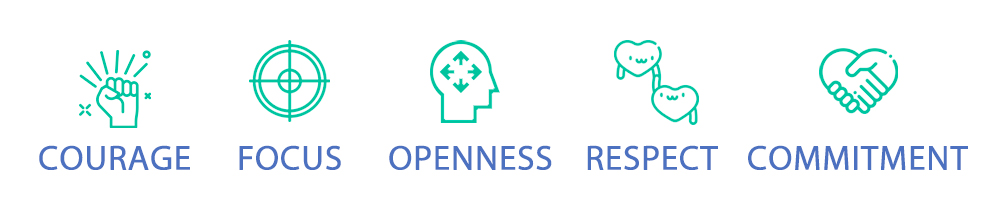
Courage, Focus, Openness, Respect, and Commitment are all essential elements for practicing Scrum. By providing opportunities for education, support, exploration, community, and networking through these five principles, they continue to promote the spread of Scrum.
There are three main certifications certified by Scrum Alliance®:
As the names suggest, these certify that an individual's understanding of the basic roles of Scrum Master, Product Owner, and Scrum Developer meets the standards set by Scrum Alliance®.
Furthermore, Scrum Alliance® offers advanced certifications for each role.
For example, in the case of CSM®, there are higher-level certifications such as Advanced Certified ScrumMaster (A-CSM®) and Certified Scrum Professional®-ScrumMaster (CSP®-SM), which can be applied for after stepping up from the foundational CSM®.
The ultimate certifications are Certified Team Coach® (CTC), Certified Enterprise Coach℠ (CEC), and Certified Scrum Trainer® (CST®), who conduct certified training.
All of these require sufficient experience and knowledge, but CST®s, in particular, are responsible for bringing growth to the world through the spread of Scrum and Agile, and are required to have a deep and broad understanding of Scrum principles and values.
Let's look at Scrum Alliance's Certified ScrumMaster® (CSM®), which is said to be the most popular among several types of Scrum Master certifications.
There are three steps to obtaining CSM®.
After successfully obtaining the CSM® certification, there are higher-level qualifications, allowing you to aim for an even higher career.
Scrum Inc. was founded in the United States by Jeff Sutherland, the co-creator of Scrum. In January 2019, the Japanese subsidiary "Scrum Inc. Japan" was established. As a company, they provide consulting and counseling for both individuals and organizations, while offering various Scrum-related training and certifications.
Certifications authorized by Scrum Inc. include Registered Scrum Master™ (RSM) and Registered Scrum Product Owner™ (RSPO).
RSM is an equivalent qualification to Scrum Alliance's CSM®. Similar to the CSM®, candidates can receive their RSM certification after completing the training and passing the online Scrum Inc. certification exam. Likewise, RSPO is equivalent to the CSPO® certification offered by Scrum Alliance.
Scrum.org™ was founded in 2009 by Ken Schwaber, co-creator of Scrum along with Jeff Sutherland. Based in Boston, Massachusetts, the organization offers various Scrum-related certifications. While regular Japanese-language training is currently unavailable, certified Scrum.org™ trainers conduct sessions in Japan several times a year.
Certifications offered by Scrum.org™ include Professional Scrum Master™ (PSM), Professional Scrum Product Owner™ (PSPO), and Professional Scrum Developer™ (PSD).
PSM™ is the equivalent of Scrum Alliance's CSM®, and Scrum.org offers three levels for this role: Level I (PSM I) to demonstrate foundational knowledge; Level II (PSM II) for those who can apply the framework to complex, real-world problems; and Level III (PSM III) for distinguished mastery. Passing an online assessment is mandatory for all levels.
Unlike other bodies, candidates for PSM I and II are not required to attend a training course; they can pay and take the exam directly via the Scrum.org website, although attending a level-appropriate course is highly recommended. The highest level, PSM III, is only available to those who have already passed both PSM I and II.
Similar to PSM, PSPO also has three levels, whereas the developer-focused PSD currently consists of a single level.
While all certification bodies offer credentials for Scrum Masters, Product Owners, and Developers, they differ in their level of depth and certification processes. The curriculum, training style, and expertise of the instructors also vary, so it is important to choose the path that best aligns with your goals and preferences.
Please apply for our various training programs
using the link below.